
Actualizado el 11 de julio de 2026
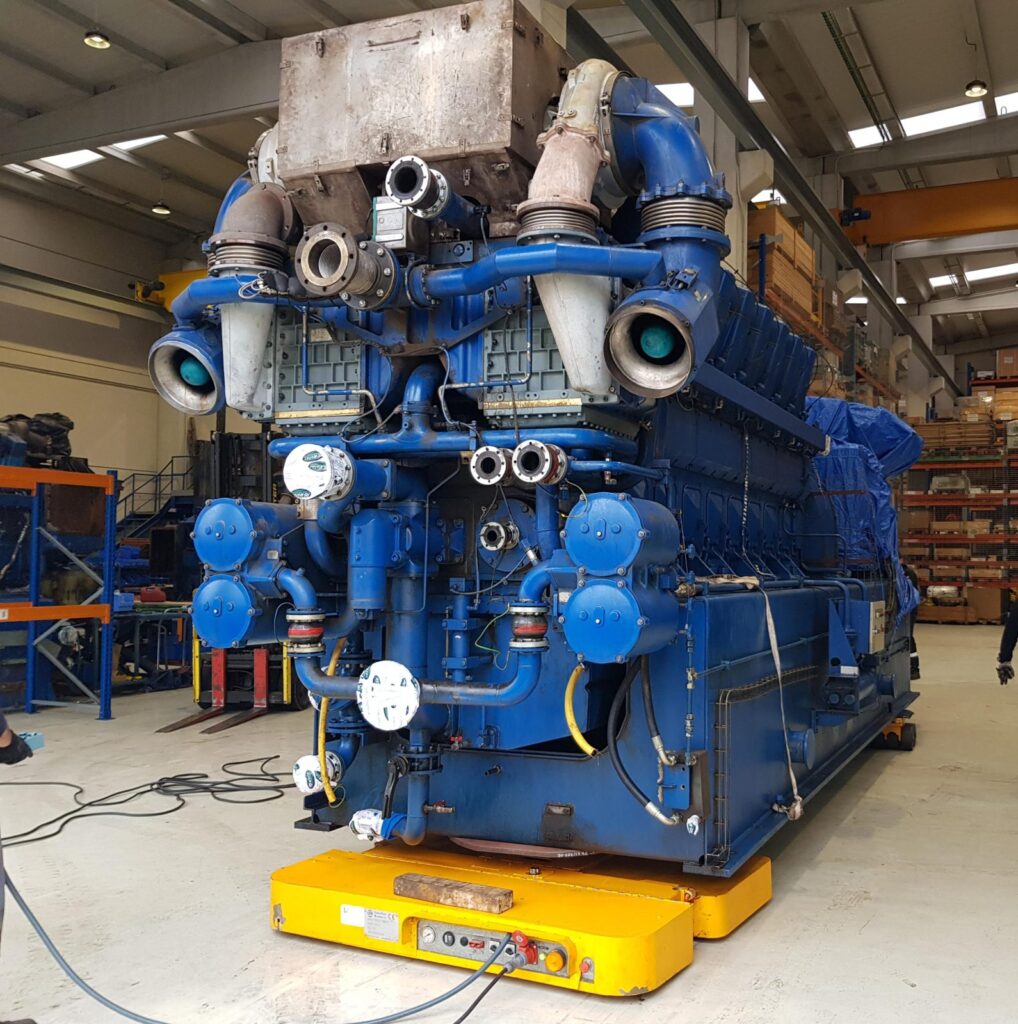
The MWM TBG 620 V16 is one of the most demanding cogeneration engines to overhaul. When a client brought us their biogas-fuelled TBG 620 V16 for an E70 — the most comprehensive maintenance step in the MWM service schedule — it meant a full disassembly, inspection, and rebuild of every major engine component.
Here is a detailed account of how we carried out the work, what we found, and what it takes to restore a cogeneration engine of this complexity to optimal operating condition.
MWM cogeneration engines are maintained according to a stepped service schedule defined by the manufacturer. Each step — E10, E20, E30, E40, E70 — corresponds to a set of inspections and replacements tied to operating hours. The E70 is the major overhaul: the most comprehensive intervention in the cycle.
For a TBG 620 V16 running on biogas, the E70 involves complete engine disassembly, inspection of every major component, precision machining where required, and a full rebuild using genuine or OEM-equivalent spare parts. It is the intervention that resets the engine’s service life and defines its reliability over the next 40,000+ operating hours.
The generator set was removed from the client’s plant by our team of MWM-specialized technicians and transported to RS Motor‘s workshop in Porriño, Galicia. Our facility is fully equipped with the tooling, lifting equipment, and parts inventory required for complete disassembly and overhaul of engines at this scale.
Having a well-stocked parts inventory on-site is not a minor point: for a V16 with this level of intervention, the availability of components directly determines turnaround time. Plants that depend on cogeneration for their energy and heat supply cannot afford extended waiting periods for critical parts.
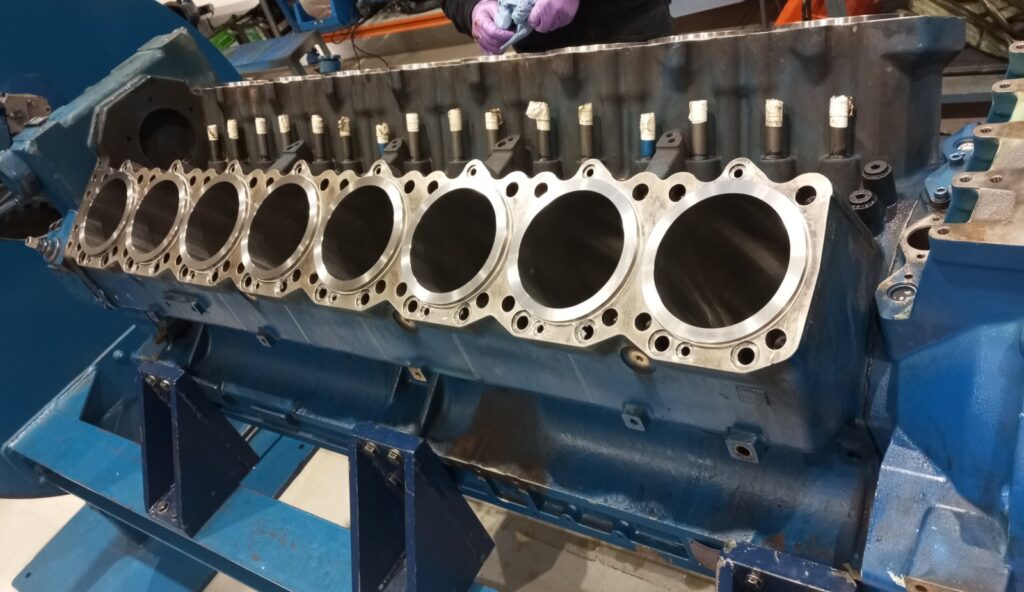
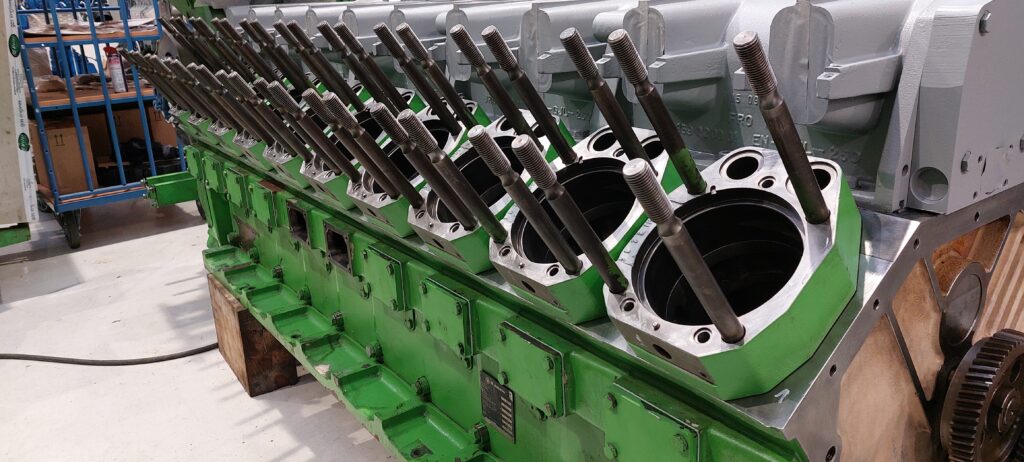
One of the most significant findings during disassembly was erosion in several areas of the engine block. This is not unusual in engines operating with biogas — aggressive combustion chemistry combined with high operating temperatures can cause material loss over time, particularly around the cylinder liner seats and coolant passages.
The block was machined to repair the affected areas, restoring it to within manufacturer tolerances. This kind of repair requires precision: working to the wrong specification compromises the engine’s dimensional accuracy and can create problems at the next overhaul. Our machine shop performed the work to the original technical documentation, with full dimensional verification at each stage.
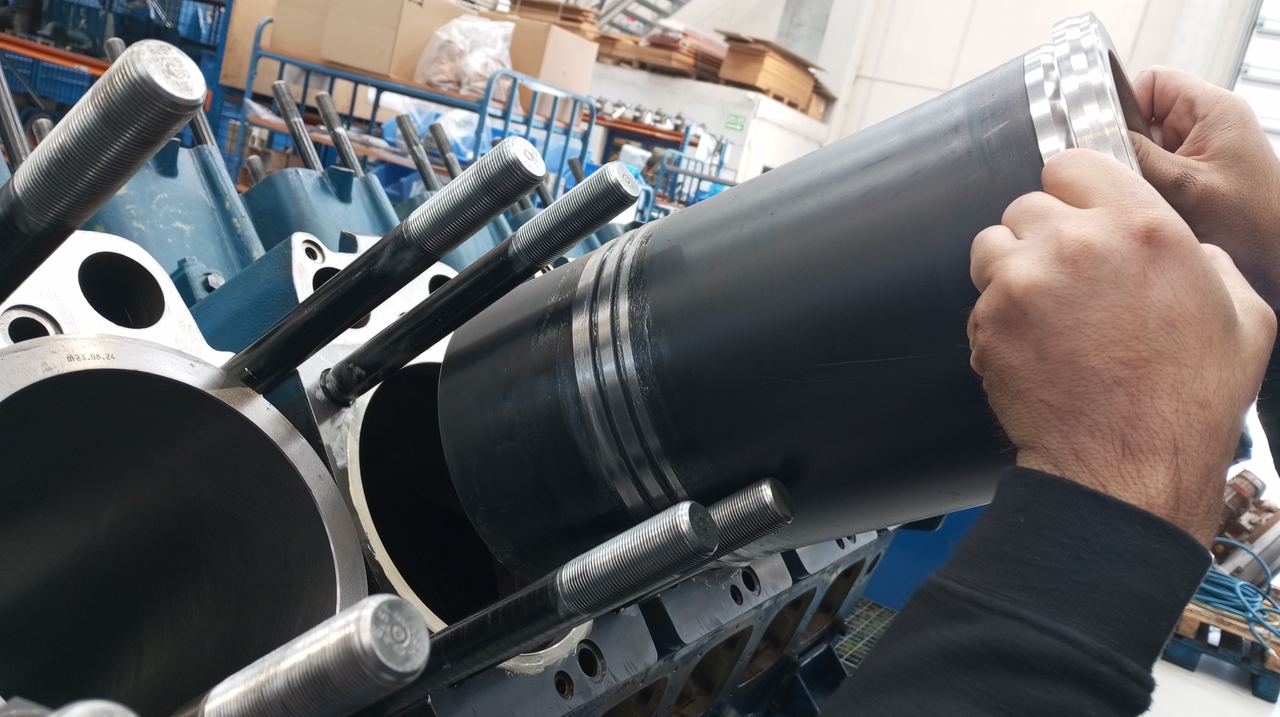
The crankshaft underwent a thorough inspection and dimensional analysis. It was found to be in good condition and within standard measurements — a positive result that allowed reuse of the crankshaft, avoiding a significant cost. All main bearing shells and connecting rod bearings were replaced as part of the standard E70 protocol. Regardless of apparent condition, bearing replacement at each major overhaul is a manufacturer requirement and best practice.
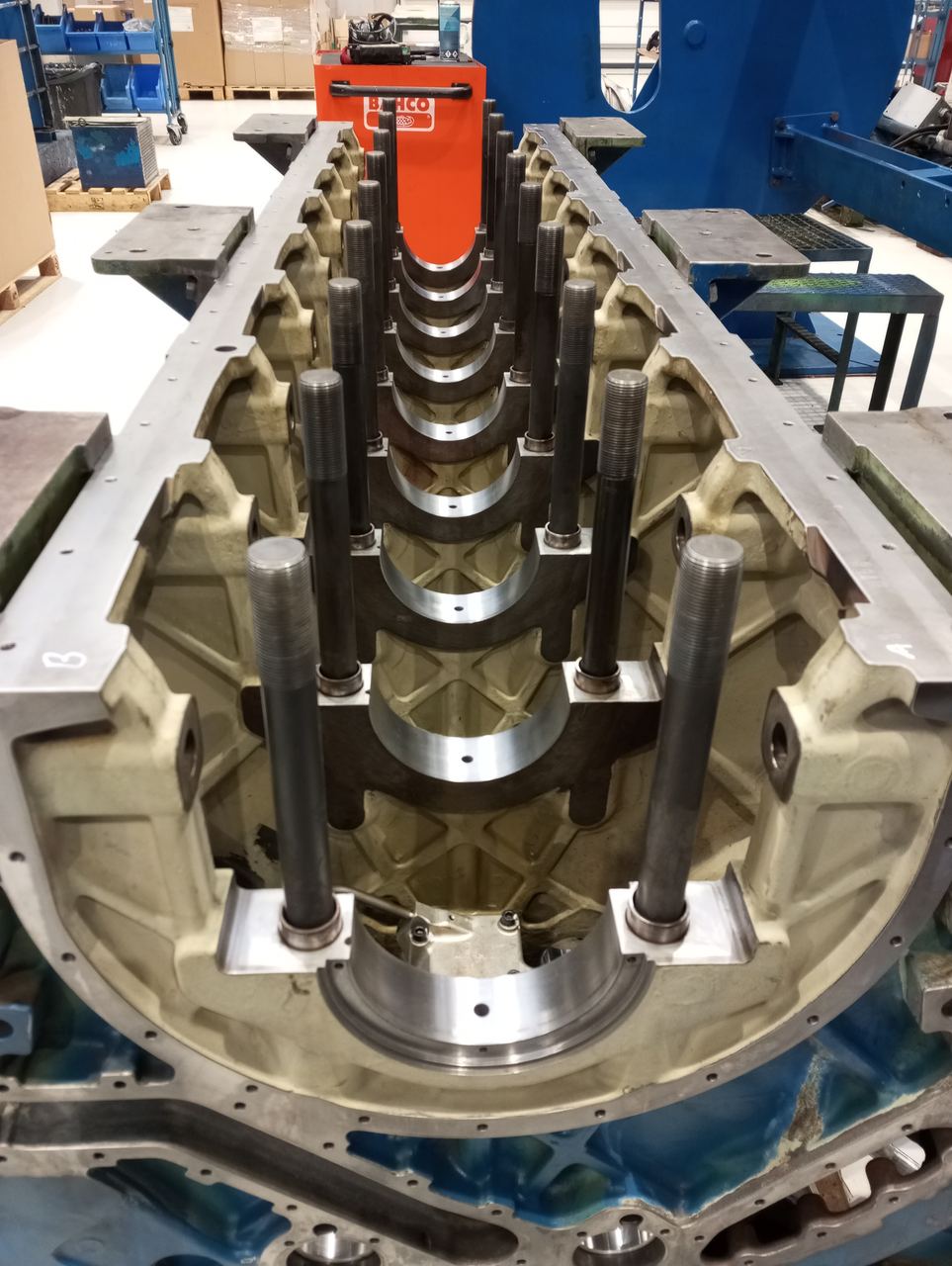
The camshafts showed damage and were replaced in full. Camshaft condition directly affects valve timing, engine efficiency, and internal component wear. On a V16, operating with a damaged camshaft until the next intervention is not an option. All camshaft bushings and tappets were also replaced.
The main oil pump was replaced with a new unit supplied by RS Motor. Correct lubrication pressure is fundamental to engine longevity — a worn or underperforming oil pump creates risks across every lubricated component in the engine.
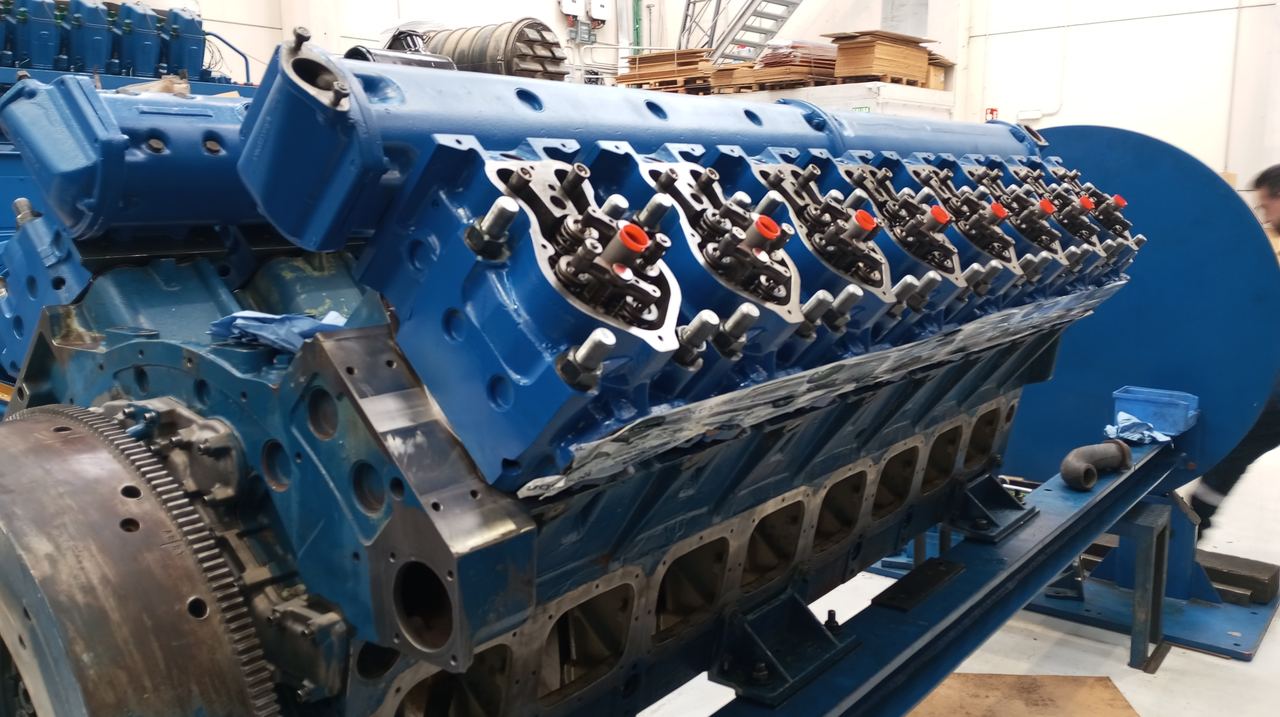
Two of the most labour-intensive elements of the E70 are the reciprocating assemblies and the cylinder heads.
Each connecting rod assembly — pistons, rings, pins, and bearings — was fully reconditioned. These components endure extreme mechanical and thermal loads during operation, and a TBG 620 V16 running on biogas places additional demands on durability due to the combustion characteristics of the fuel. All worn or out-of-tolerance components were replaced with genuine or OEM-equivalent parts.
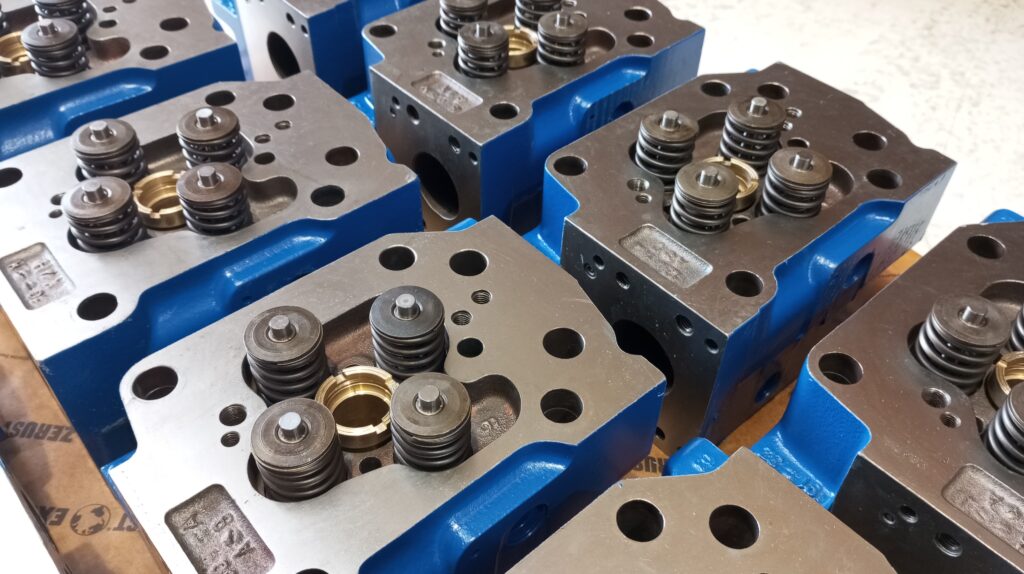
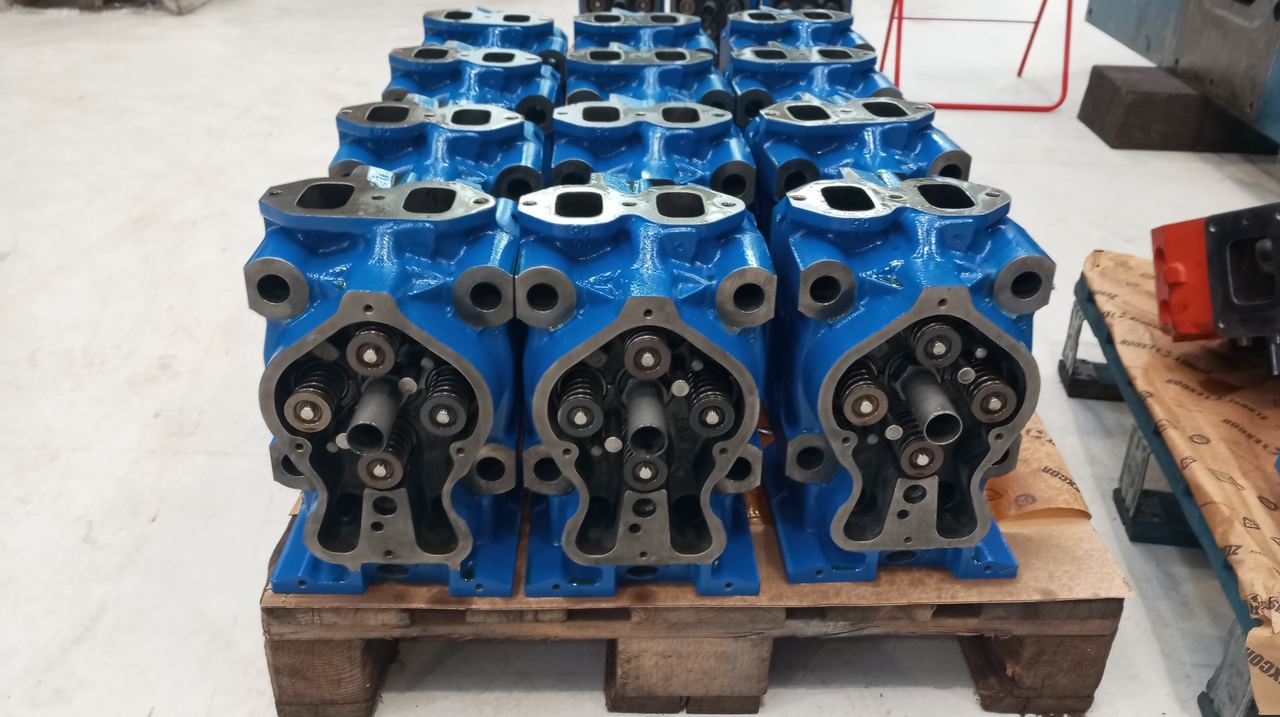
The 16 cylinder heads underwent a meticulous reconditioning process: complete inspection for wear, cracking, and deformation; valve guide and valve seat replacement; surface grinding where required; and hydraulic leak testing before reassembly. Every head was documented individually, and only genuine or OEM-equivalent spare parts were used throughout.
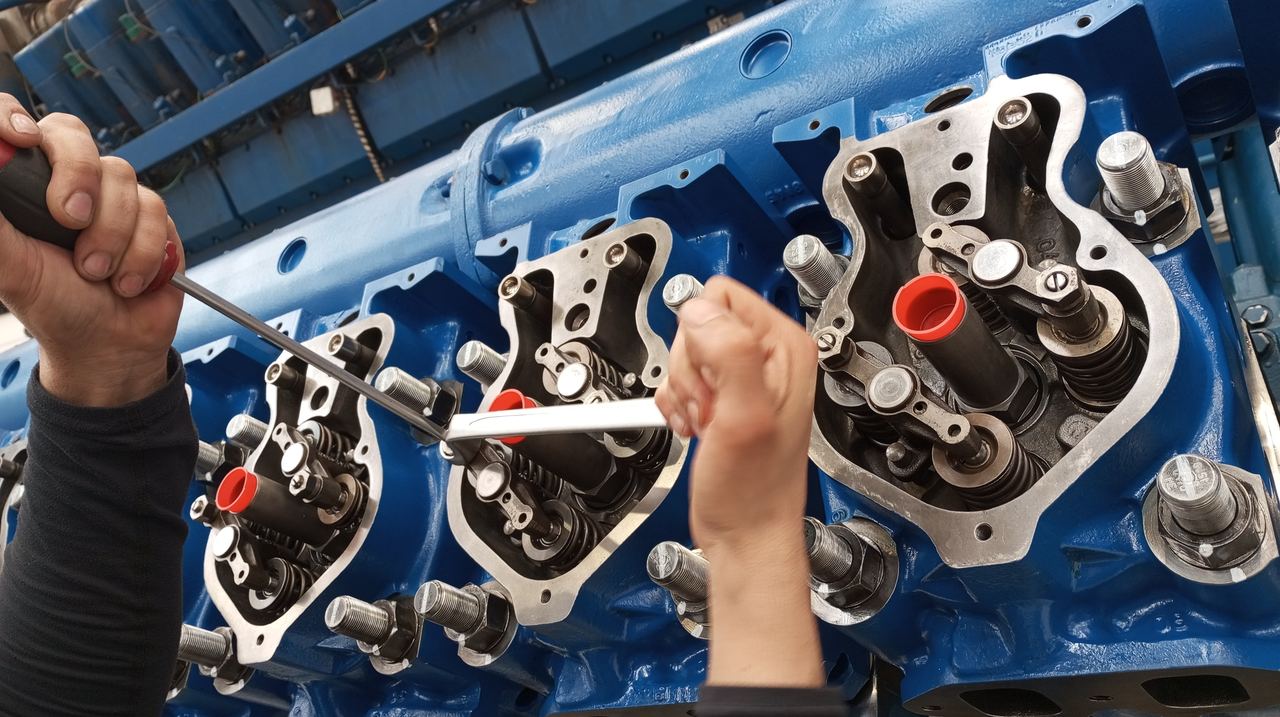
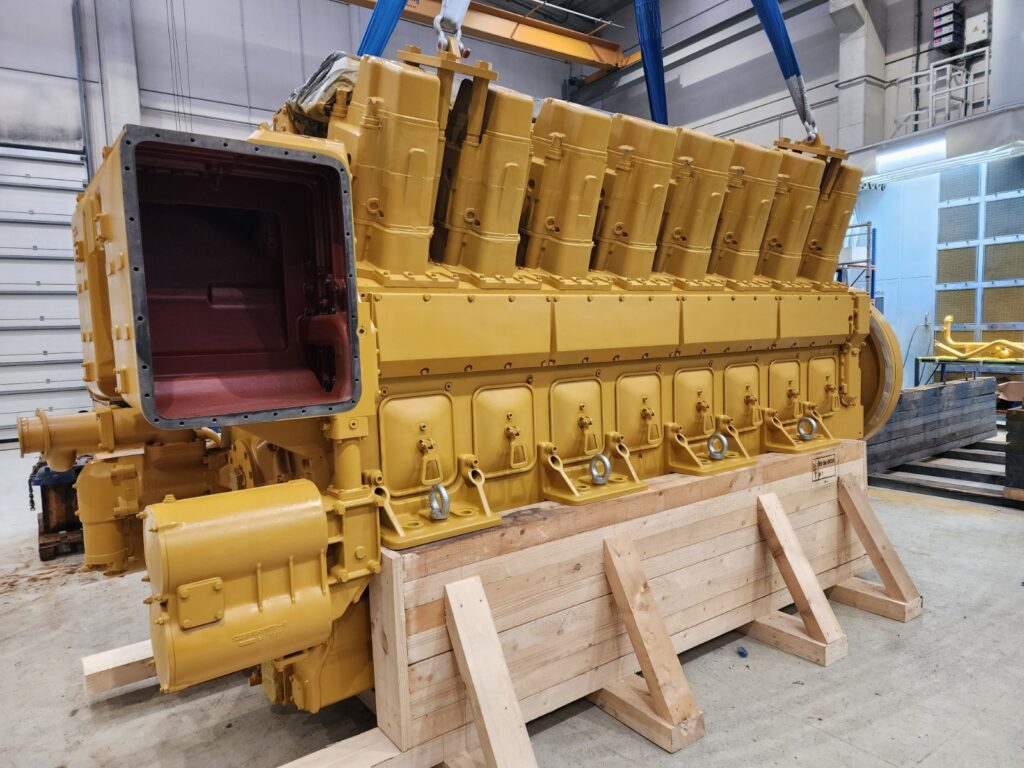
The turbocharger and alternator were subjected to standard inspections based on their current operating hours. Before shipping the engine to the client, the complete unit received a coat of primer and paint in RS Motor’s specialized painting booth.
Proper surface treatment is not just cosmetic: it protects the engine from corrosion and extends the service life of external components — particularly important for engines operating in humid environments or where biogas composition includes aggressive compounds.
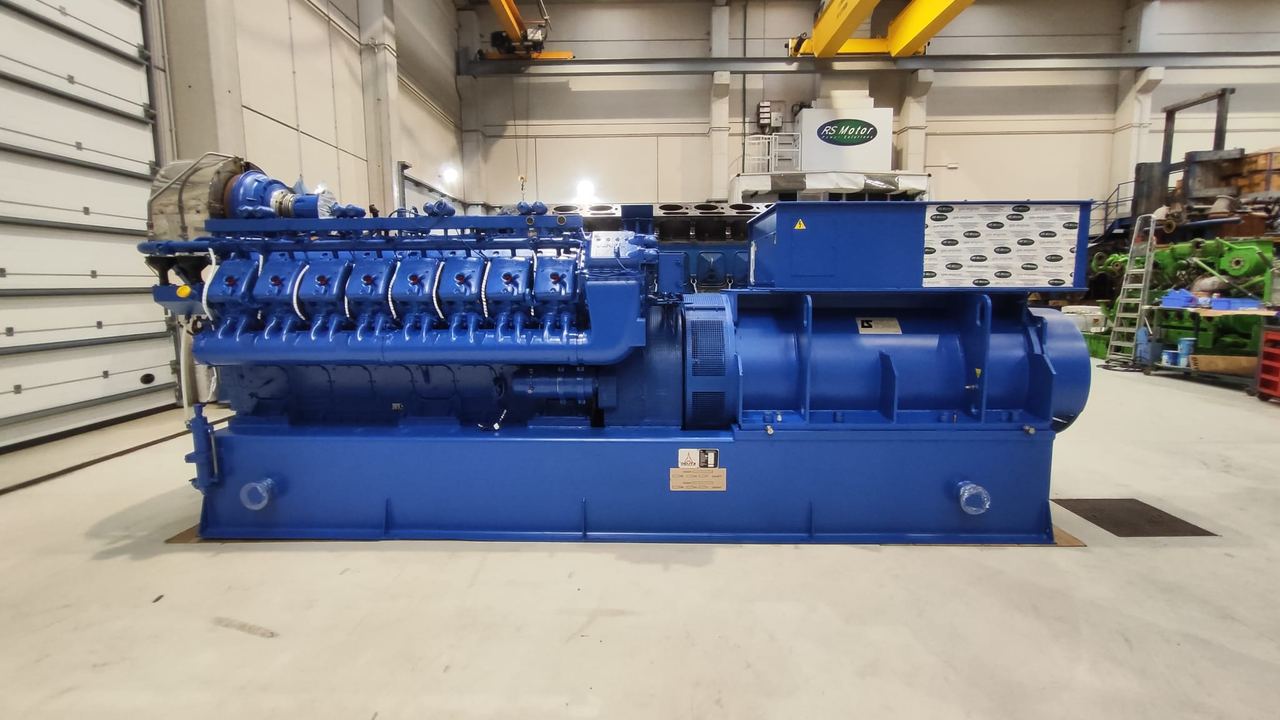
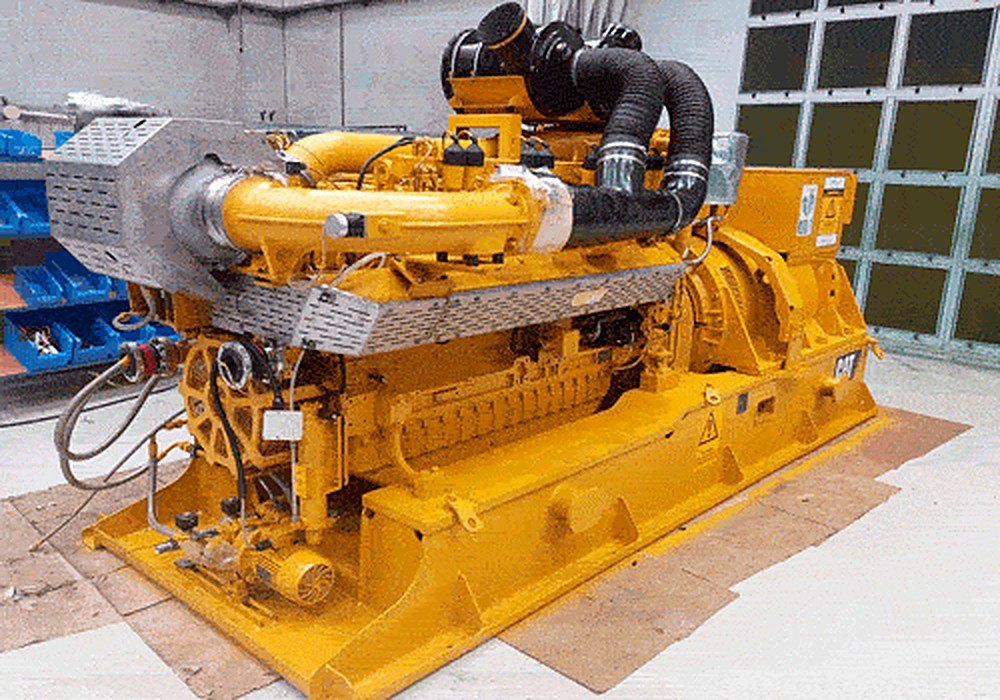
Once the rebuild was complete at our workshop, the generator set was shipped to the client’s plant. RS Motor technicians handled the reconnection and commissioning on-site, carrying out all delivery tests and verifying operating parameters: temperatures, pressures, oil pressure, coolant temperature, and control system function.
Immediately following the overhaul, the E10 maintenance step was performed — the first scheduled intervention after a major rebuild, designed to check the engine’s condition after its initial operating hours post-reassembly. This step catches any adjustment needs that arise as rebuilt components bed in, and confirms the engine is performing to specification before full handover.
An E70 on a TBG 620 V16 is not a job for a generalist workshop. It demands:
RS Motor has been carrying out overhauls of this complexity for clients in more than 60 countries. Our workshop in Porriño is equipped for complete engine disassembly and rebuild at any scale, and our parts inventory minimizes waiting time for critical components.
The E70 is the major overhaul in the MWM maintenance schedule — the most comprehensive intervention, involving complete engine disassembly and rebuild. Smaller steps (E10, E20, E30, E40) involve progressively detailed inspections and targeted part replacements without full disassembly. The E70 is typically carried out every 40,000–60,000 operating hours, depending on the engine model and fuel type.
Yes. RS Motor has carried out maintenance and overhaul work for clients in more than 60 countries. We can transport engines to our Porriño workshop for major overhauls, or deploy technicians to the client’s facility where logistics make that preferable.
Duration depends on the engine’s condition and the extent of machining and reconditioning required. Availability of parts is one of the main factors affecting turnaround time. RS Motor’s parts inventory is one of our key operational advantages — it means we are not waiting weeks for critical components while the engine sits disassembled.
Yes. All genuine or OEM-equivalent spare parts used in our interventions are supplied by RS Motor, ensuring full traceability and quality control over every component installed.
Yes. In addition to MWM, RS Motor specializes in Jenbacher, Guascor, and CAT cogeneration engines. We carry out maintenance, repair, and overhaul services across all major platforms.
Whether your engine is scheduled for an E70 or you are dealing with an unexpected failure, contact our technical team before the problem escalates.
Email us at [email protected]. We will assess your engine’s condition and provide a complete overhaul proposal with full parts and labour breakdown.
Analía Martínez - RS Motor